

Custom plastic injection molding for technical parts
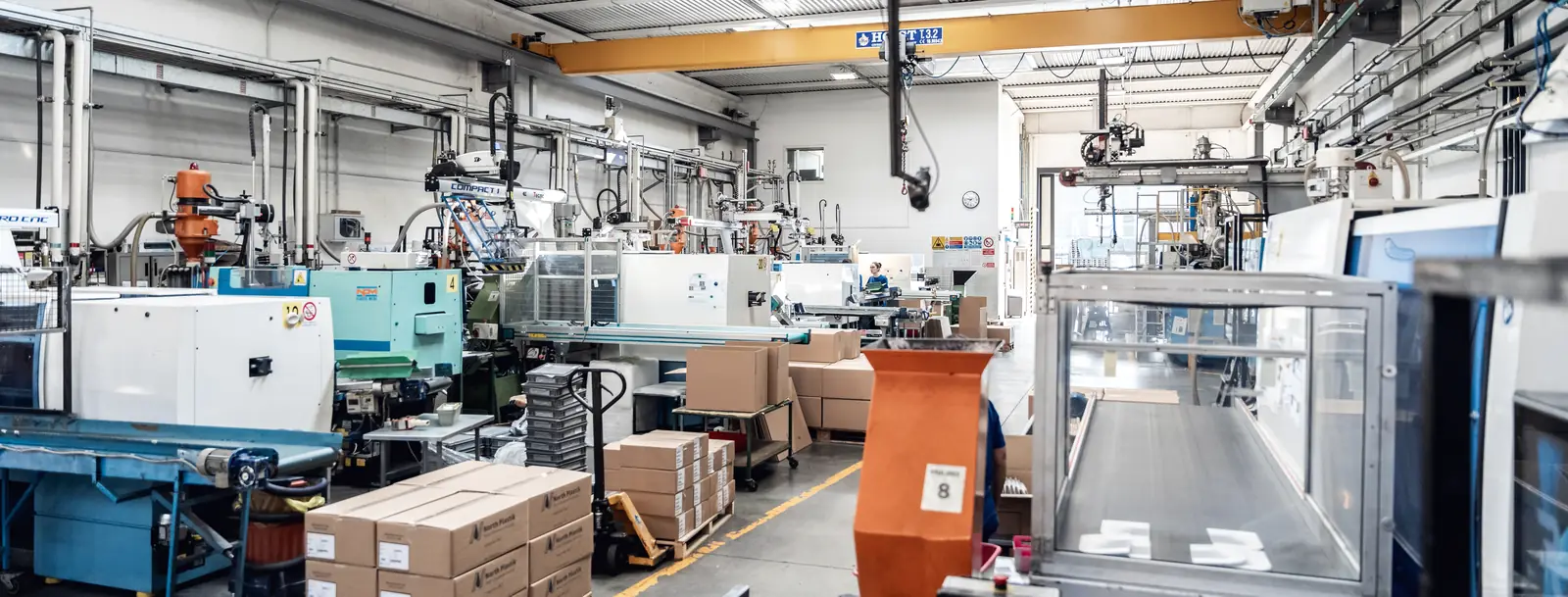
Bemar Plast has been a contract injection molder since 1995, in San Giovanni Ilarione near Verona, Italy. Technical components in engineering polymers, from batches of 1,000 parts up to 1 million a year per part number. We take care of the mold, molding, quality control and secondary operations: one point of contact, with all molding done in Italy.
At a glance
- In business
- since 1995
- Quantities
- 1,000 to 1 million parts a year per part number
- Presses
- 13, from 10 to 480 t (≈ 530 US tons), 2 two-shot
- Part weight
- from micro parts up to 1.8 kg (≈ 4 lb)
- Materials
- engineering and commodity polymers
- Molds
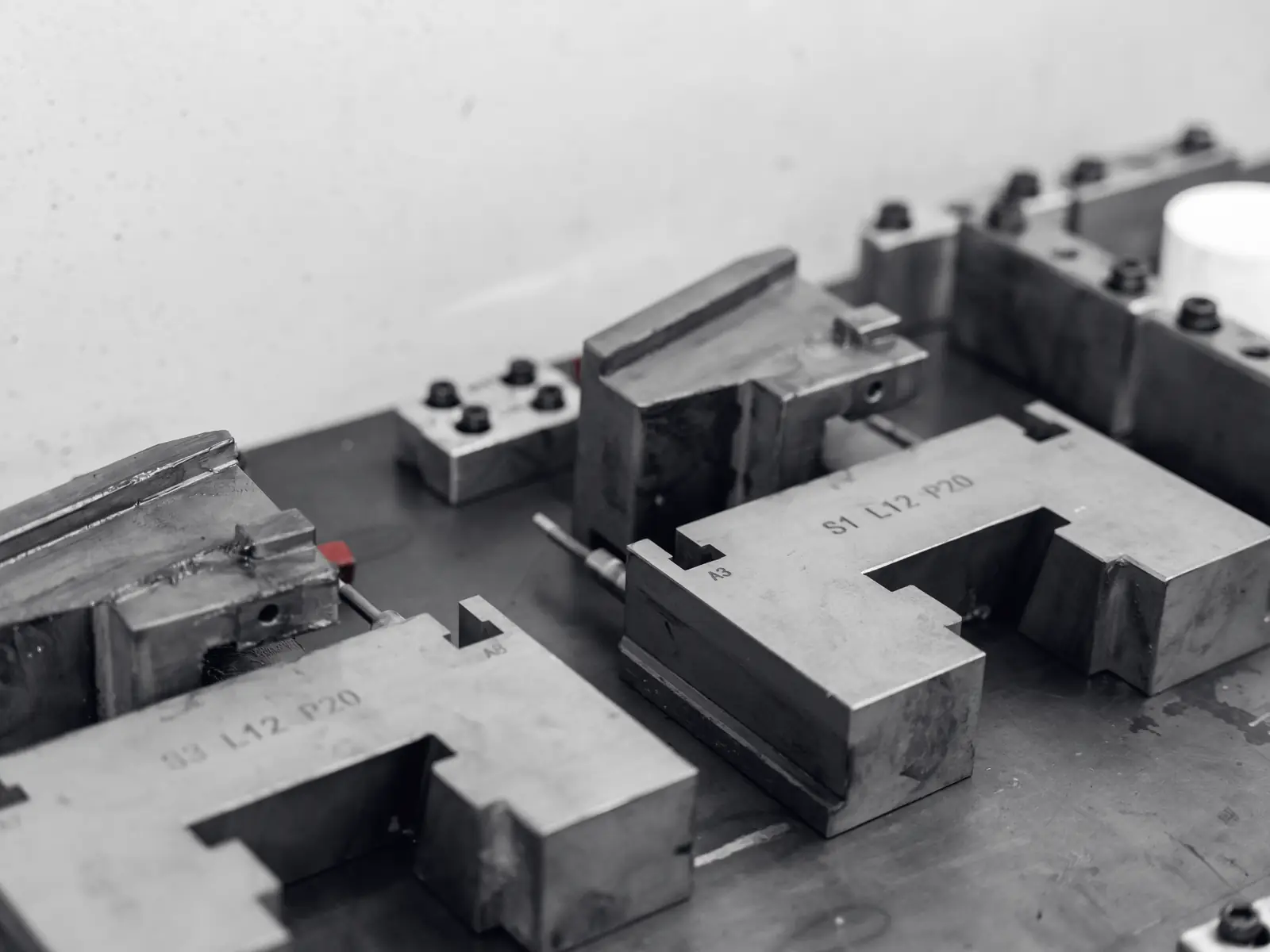
- designed in-house, built in Italy or China, or your own
- Quality
- ISO 9001:2015, IMQ No. 9190.BMRP
- Languages
- Italian, English, German, French, Spanish
- Location
- San Giovanni Ilarione, Verona, Italy
- Since 1995
- ISO 9001 since 2013
- 13 presses, 10 to 480 t
- 9 robotized lines
- 100% renewable electricity
Why an Italian supplier
We mold every part in our own plant near Verona, Italy. For European companies, that means a short, transparent supply chain with a single point of contact.
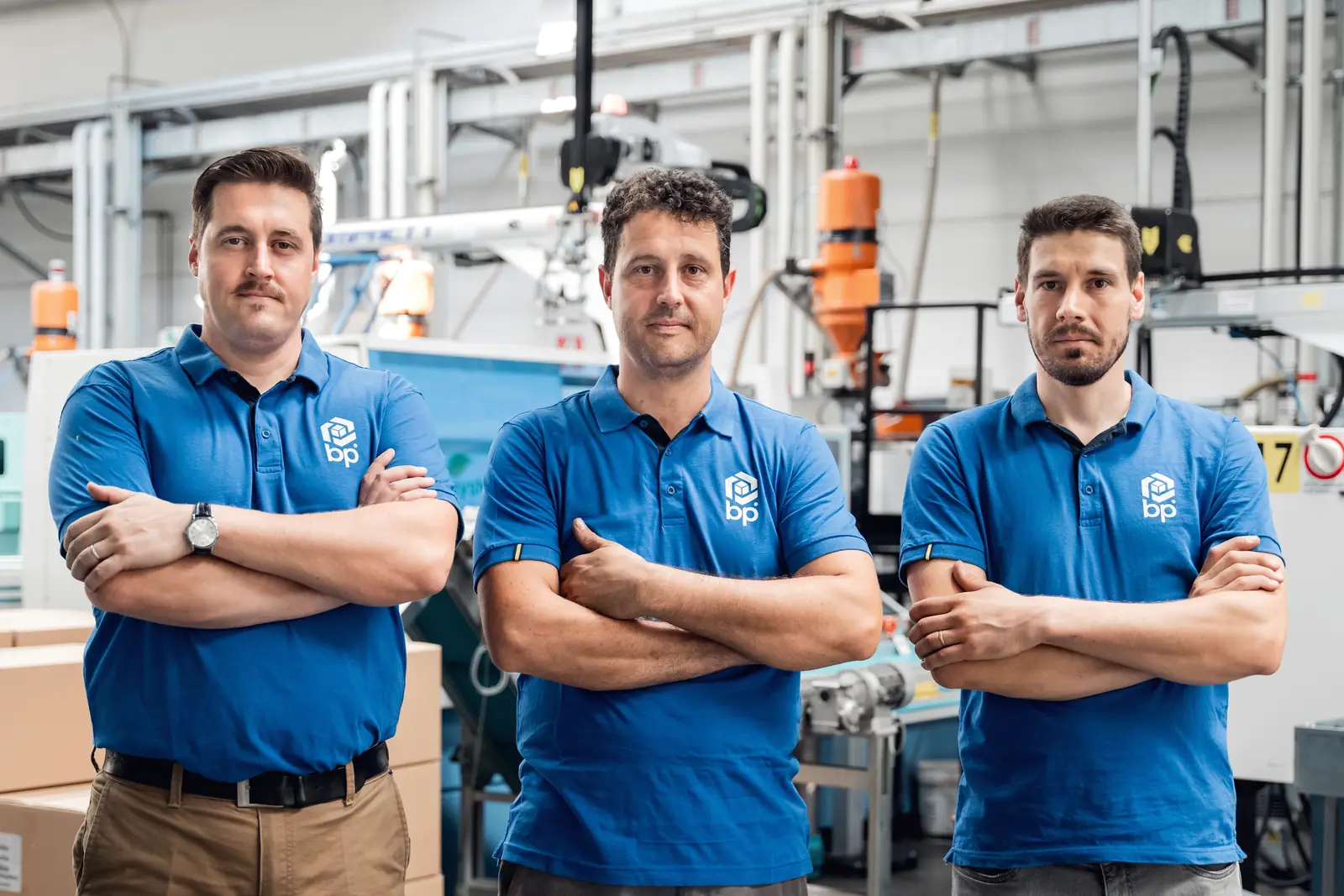
Every part molded in Italy
We mold every part in our plant in San Giovanni Ilarione, under an ISO 9001:2015 certified quality system, with documented dimensional inspection. 3D-printed prototypes are made in Italy too.
A European supply chain
For customers in the European Union: no customs formalities, Central European Time (CET), single-market rules. Customers outside the EU (UK, Switzerland, US, Canada): standard export customs procedures apply.
Molds built in Italy or China, your choice
On request we prepare a dual quote, Italy and Asia, so you can compare cost and lead time. Every mold is built by qualified partners to our technical specification; design approval, tryout and maintenance stay with us.
One technical point of contact
You talk directly to the people who design and mold your part, from feasibility to finished component.
When we are the right partner
We are a good fit if
- you have a technical component with a defined design, or one at an advanced stage
- you plan ongoing production, from 1,000 parts up to 1 million a year per part number
- you already own a mold and need a reliable molder
- you want a single supplier from the mold to the assembled, packed part
- you need to meet documented cosmetic requirements and tolerances
We are not the right choice if
- you need only a few units: in that case we suggest 3D printing
- the component has to be produced in a cleanroom
- the decision rests on the lowest price alone
From drawing to series production: how we work
Many molding problems start at the design stage. That is why we review the part with your engineering team before the mold is built, and follow the order through to delivery.
Inquiry
You send us the 2D drawing or 3D model, the material, annual volumes and requirements. We reply with a technical assessment and a quote.
Part analysis and simulation
Geometry, wall thickness, draft angles and gate locations. Filling and warpage simulations, run by specialist partners, check the part before cutting steel, to reduce scrap and mold changes.
Mold
Designed by our engineering team and built by partners in Italy or China, your choice, to our specification. On request, a dual quote to compare cost and lead time. If you already own a mold, we start straight from production.
Sampling
The first molded parts are measured and supplied with an inspection report, for your approval before series production.
Series production
On 13 presses, 9 of them robotized with in-line labeling; we follow each order through to delivery.
Secondary operations and delivery
Welding, assembly, labeling and agreed packaging: the part arrives ready for your line.
Already have a mold? We will put it into production
Molding with customer-owned molds is the core of our business. The mold always remains your property.
Transfer from another supplier
Bring us the mold that runs elsewhere today: we assess it and put it into production on the right press.
A mold you have built
If you have the mold built yourself, you deliver it to us and we take care of molding and secondary operations.
Mold storage and care
We store it in our mold warehouse, treated with specific protective products and looked after by our technicians to extend its service life as far as possible.
Quality you can measure
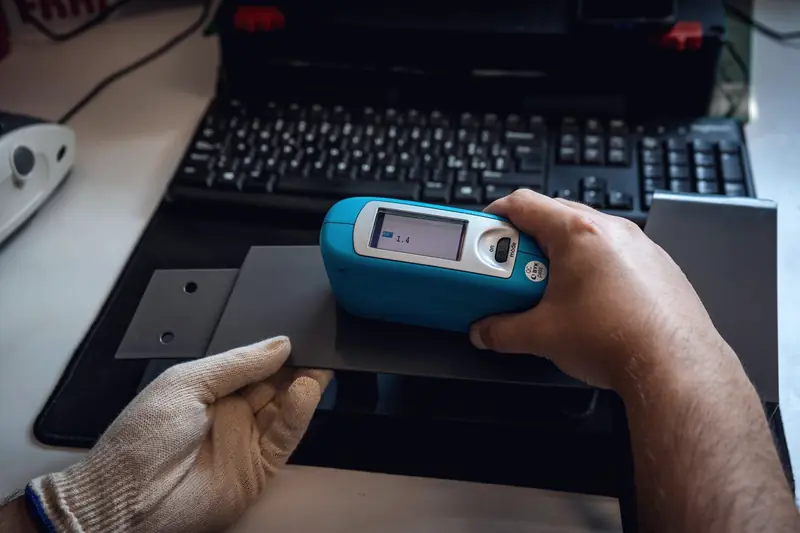
On cosmetic components, we check color with a spectrophotometer and a colorimeter.
Dimensions are measured by the KEYENCE IM-X1000 image measurement system: the part is placed on the stage, with no fixtures, and the values are compared with the drawing. The result is an OK/NG judgment with an inspection report.
- Quality system
- ISO 9001 since 2013, now ISO 9001:2015 (IMQ certificate No. 9190.BMRP)
- Valid
- until June 27, 2028
Our molding technologies
All of them in-house. We work with you to choose the one that gets to the right part in the fewest steps.
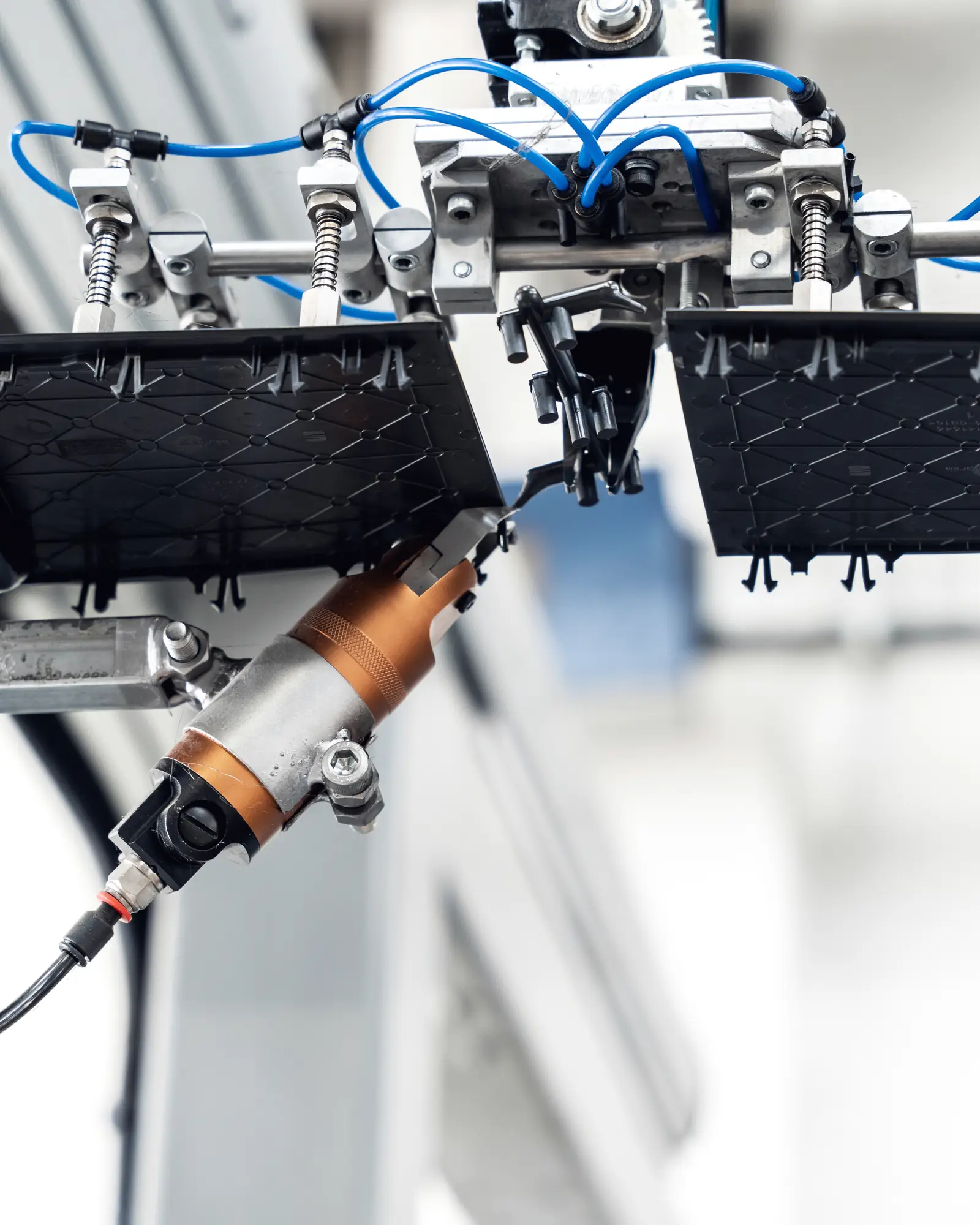
Plastic injection molding
Technical and cosmetic components in engineering and commodity polymers, from micro parts up to 1.8 kg, on 13 presses from 10 to 480 t.
Two-shot (2K) molding
Two materials or two colors in a single cycle, on presses with a rotary table: no subsequent assembly.
Co-injection
Two materials injected into the same cavity, combining a cosmetic skin and a technical core in one part.
Overmolding and insert molding
Metal inserts or previously molded components encapsulated in the part during molding.
Micro molding
A 10 t press dedicated to small, precise parts, including two-material parts.
Injection molding or 3D printing?
It depends mainly on volume. The two technologies work together: 3D printing validates the part, injection molding produces it in series.
| Criterion | Injection molding | 3D printing |
|---|---|---|
| Quantity | from 1,000 parts (recommended), up to 1 million a year per part number | for prototypes and small quantities |
| Upfront investment | the mold, amortized over the volume | no mold |
| Cost per part | falls as volume rises | stays similar as volume rises |
| Material | the production material: engineering and commodity polymers | polymers for FDM, SLA and MJF |
| Typical use | series production | form and fit checks, pre-series |
Not sure which is right for you? We assess your part and tell you. Request a quote
Our press fleet
13 molding lines, from a 10 t press for micro molding to a 480 t press for parts up to 1.8 kg. Select a press to see its data.
Full press fleet table
| Press | Clamping force (t) | Tie-bar spacing (mm) | Mold height (mm) | Screw (mm) | Shot weight PS (g) | Equipment |
|---|---|---|---|---|---|---|
| No. 15 | 10 | 96 × 96 | 60–190 | 18 | 17.8 | two-shot |
| No. 18 | 60 | 360 × 330 | 120–370 | 28 | 79 | HES |
| No. 22 | 60 | 330 × 330 | 120–370 | 28 | 79 | HES |
| No. 4 | 65 | 400 × 360 | 100–400 | 35 | 154 | HES |
| No. 17 | 90 | 410 × 360 | 150–450 | 40 | 220 | robot, HES |
| No. 19 | 90 | 410 × 360 | 150–450 | 35 | 160 | robot, HES |
| No. 23 | 130 | 460 × 410 | 150–500 | 40 | 220 | robot, HES |
| No. 16 | 170 | 510 × 460 | 170–550 | 45 | 345 | robot, HES |
| No. 20 | 170 | 510 × 460 | 170–550 | 45 | 345 | robot, HES |
| No. 14 | 220 | 560 × 560 | 200–600 | 60 | 670 | robot, HES |
| No. 12 | 280 | 630 × 560 | 200–800 | 65 | 1072 | two-shot, robot |
| No. 21 | 380 | 710 × 710 | 350–820 | 70 | 1211 | robot, HES |
| No. 24 | 480 | 811 × 785 | 350–900 | 80 | 1787 | robot, HES |
Data as of February 7, 2025. On every line: dehumidifying dryer, beside-the-press granulator, mold temperature controller.
Have a drawing? Send it to us and we will tell you which press and which mold it needs.
Request a quote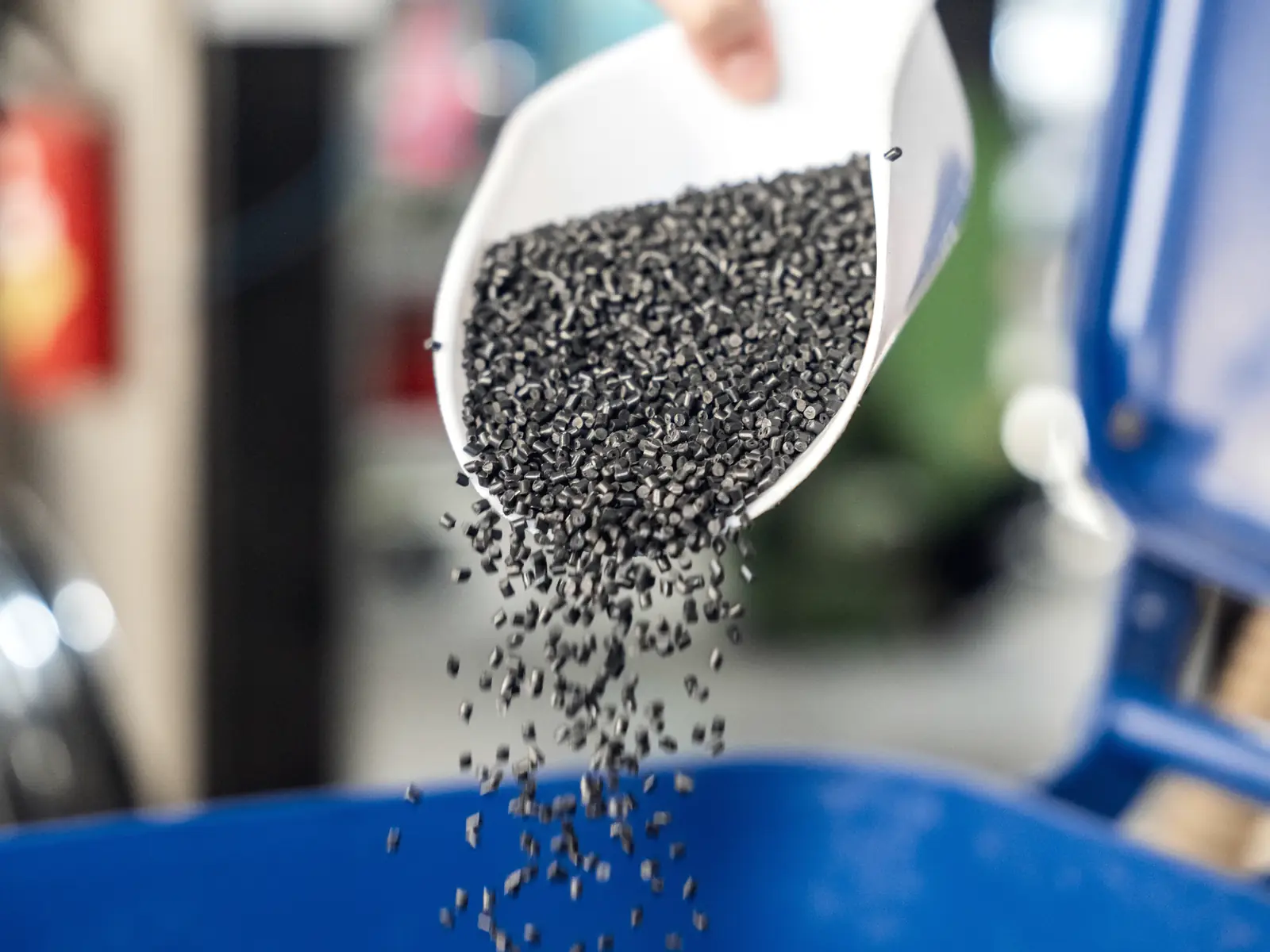
Materials
We mainly mold engineering polymers. Every line has its own dryer, so that hygroscopic materials such as polyamides enter the press at the correct moisture content.
Engineering polymers
- PA6
- PA66
- Glass-filled PA
- POM
- PBT
- PC
- PC/ABS
- PPA
Commodity polymers
- PP
- ABS
- PS
- PMMA
- TPE
We assess other materials on request, together with your engineering team.
After molding, we take care of the rest
Parts can leave our plant ready for your assembly line.
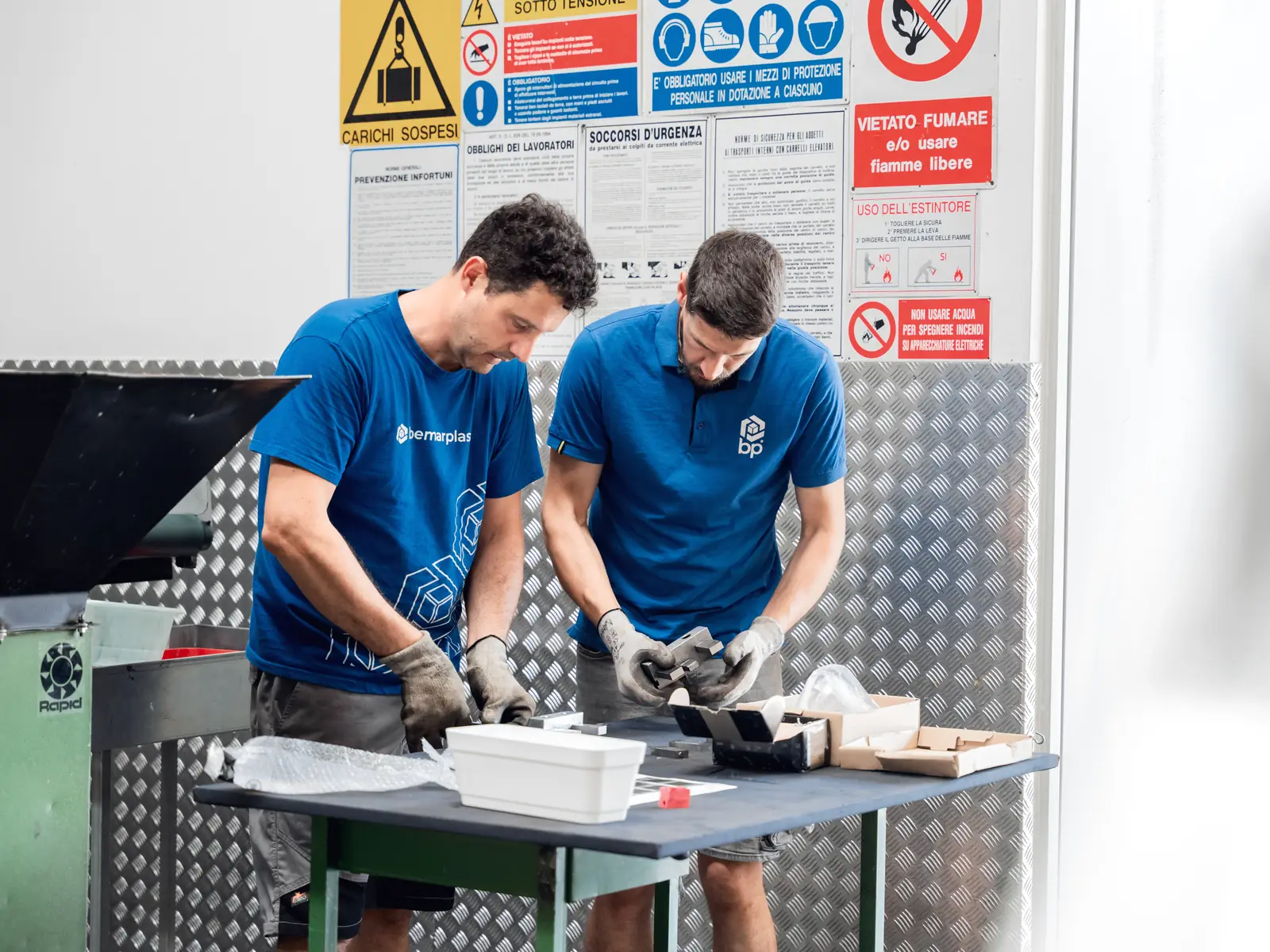
Ultrasonic welding
On our own in-house machine, to join plastic components without adhesives.
Assembly
Subassembly and component insertion, including parts from other suppliers.
Automated work cells
When volumes justify it, we design automated cells dedicated to your part.
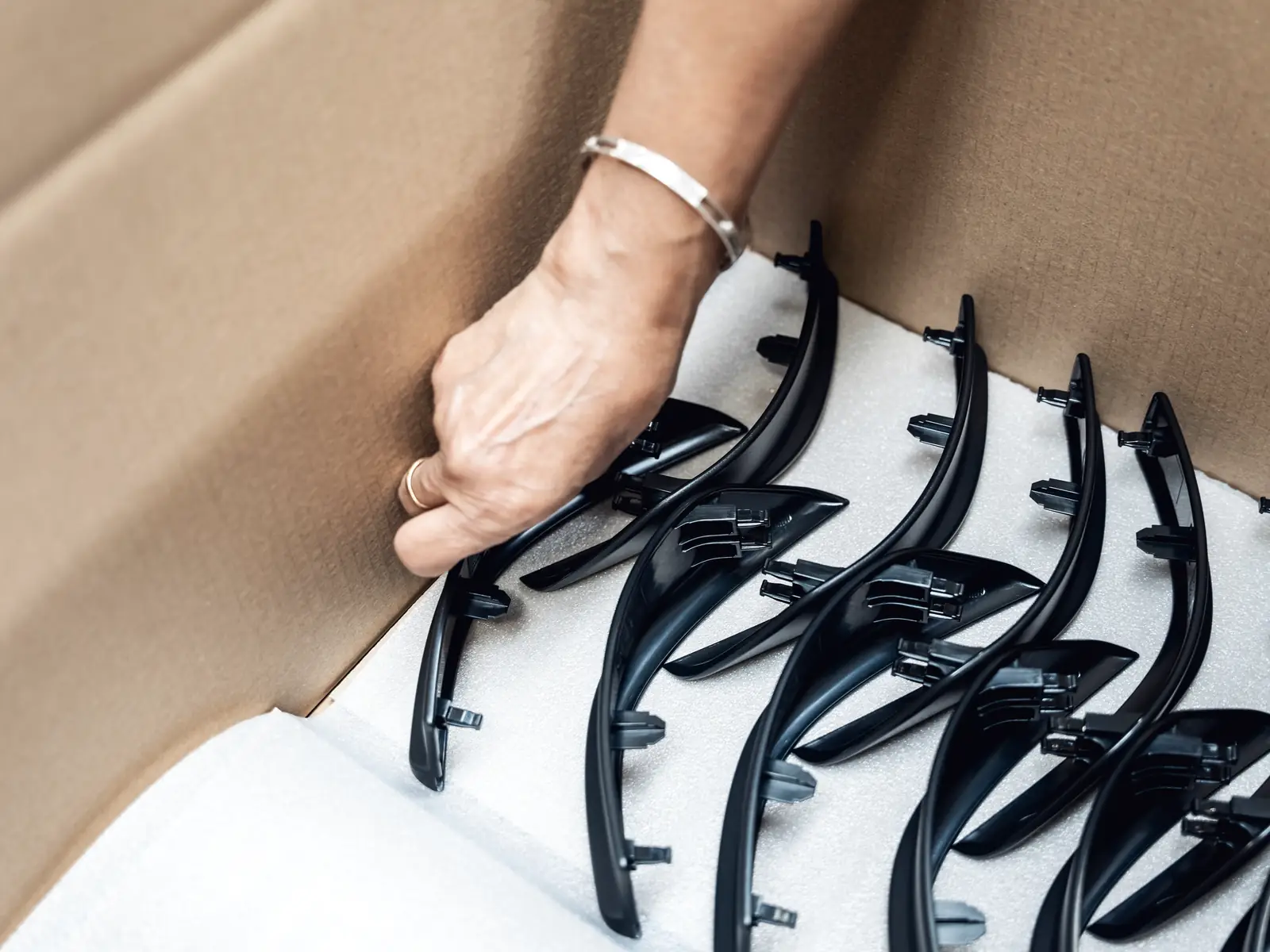
Labeling and packaging
In-line labeling on the robotic presses and packaging agreed with you.
Industries we serve
Technical components for industries with precise requirements for material, tolerances and appearance.
From prototype to series production, with one point of contact
Frequently asked questions
Answers to the questions buyers and engineering teams ask us most often.
What is the minimum order quantity for plastic injection molding?
We recommend at least 1,000 parts, although it depends on the project: below that quantity, the cost of the mold weighs too heavily on each part. For lower quantities, or to validate the design before series production, we offer 3D-printed prototypes.
How many parts can you produce per year?
We run ongoing production of up to 1 million parts a year per part number, on 13 presses from 10 to 480 t. Nine lines are robotic, with in-line labeling.
How much does custom injection molding cost?
The price of custom injection molding has two components: the mold, which is an upfront investment, and the cost per part. The mold cost depends on size, number of cavities and part complexity; the cost per part depends on material, weight, cycle time and quantity. The higher the annual volume, the more the mold investment is spread out. Send us the drawing, material and quantities and we will prepare a detailed quote.
How large or heavy can a molded part be?
Parts range from micro components on our 10 t press up to a shot weight of about 1.8 kg (≈ 4 lb) in PS on our 480 t (≈ 530 US tons) press, which takes molds with a tie-bar spacing of 811 × 785 mm (≈ 31.9 × 30.9 in). Data for every press is in the press fleet table.
Which materials do you mold?
We mainly mold engineering polymers, such as PA6 and PA66 polyamides (including glass-filled grades), POM, PBT, PC and PC/ABS, as well as commodity polymers such as PP, ABS and PS. We assess other materials on request, together with your engineering team.
Can I bring you a mold I already own?
Yes. Molding with customer-owned molds is the core of our business: you can transfer a mold that currently runs at another supplier, or have one built yourself and deliver it to us. We take care of molding and secondary operations.
Who owns the mold, and where is it stored?
The mold always belongs to the customer. If you wish, we store it in our mold warehouse, where it is treated with specific protective products and looked after by our technicians to extend its service life as far as possible.
Can the mold be built in China?
Yes, the mold can be built in Italy or China, your choice. On request we prepare a dual quote, Italy and Asia, to compare cost and lead time. Every mold is built to our technical specification; molding always takes place in our plant in Italy.
Can you overmold metal inserts or make two-material parts?
Yes. We overmold metal inserts and make two-material or two-color parts in a single cycle, on presses with a rotary table. We also offer co-injection and micro molding.
Do you handle assembly and secondary operations?
Yes, we handle them in-house. We have our own ultrasonic welder, we assemble components and, when production requires it, we build automated work cells dedicated to your part.
How do you check part quality?
Part quality is managed under a quality system certified to ISO 9001:2015 (IMQ certificate No. 9190.BMRP). Dimensions are measured by the KEYENCE IM-X1000 image measurement system, with an OK/NG result and an inspection report; on cosmetic parts we check color with a spectrophotometer and a colorimeter.
What do you need to prepare a quote?
To prepare a quote we need the 2D drawing or 3D model (STEP, IGES or PDF), the required material or the part's operating conditions, approximate annual quantities, and the cosmetic and tolerance requirements. If some data is missing, we define it together.
Do you sign NDAs?
Yes. We sign non-disclosure agreements whenever the customer requests one; our legal team reviews each agreement before signing.
Which languages do you speak?
Italian, English, German, French and Spanish. Our technical staff work in Italian and English; our sales team supports customers in all five languages.
Do you work for the medical industry?
Yes, for components for non-implantable medical applications, produced in a controlled industrial environment. We do not have a cleanroom: for parts that require one, we are not the right supplier.
Where do you manufacture?
All injection molding takes place in our own plant in San Giovanni Ilarione, near Verona, Italy, under an ISO 9001:2015 certified quality system. 3D-printed prototypes are also made in Italy.
Why choose an Italian injection molding company?
Bemar Plast, a contract injection molder in Italy since 1995, molds every part in its own plant near Verona, under an ISO 9001:2015 certified quality system with documented dimensional inspection. You talk directly to the people who design and mold your part, from feasibility to finished component. Molds are built in Italy or China, your choice, to our technical specification, with a dual quote on request; design approval, tryout and maintenance stay with us. For customers in the European Union, there are also no customs formalities.
Send us your drawing, and we will tell you how to mold it
We reply with a technical assessment and a quote. To prepare them, we need three pieces of information about your component.
-
The part
The 2D drawing or 3D model of the component.
- STEP
- IGES
-
Material and annual volume
The required material, or the part's operating conditions if the material has yet to be chosen. Then the approximate annual volume.
-
Cosmetic requirements and tolerances
Visible surfaces, color and finish, and the critical tolerances to be met.
If you do not have all the data yet, write to us anyway: we will define it together.
- Phone
- +39 045 6550855
- [email protected]
- Hours
- Monday–Friday, 8 a.m.–6 p.m. Italian time (2 a.m.–noon ET)
Page maintained by the Bemar Plast Team. Last updated: November 17, 2026.