

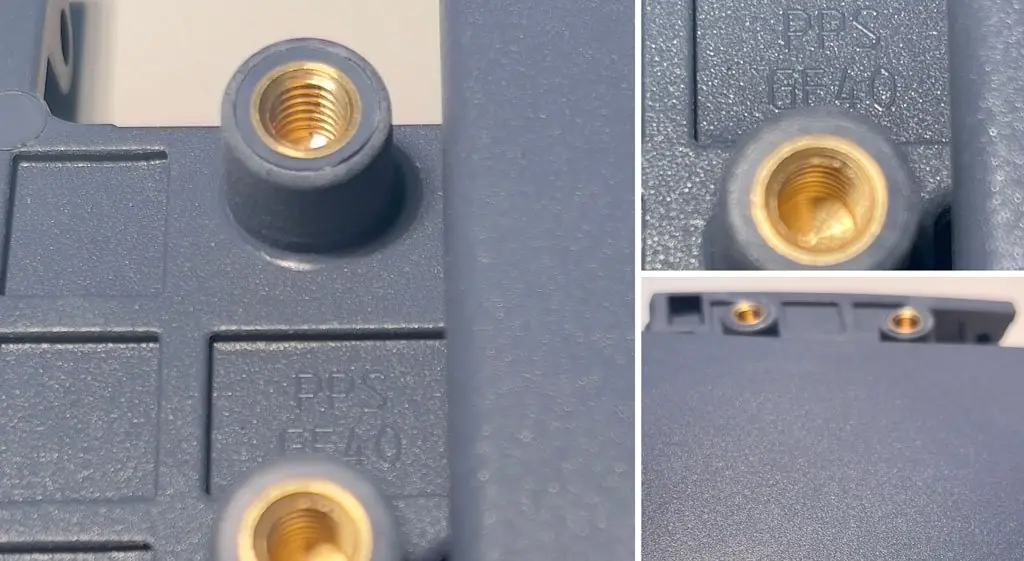
PPS (polyphenylene sulfide) is a semi-crystalline, high-performance engineering thermoplastic used when a part has to withstand high temperatures, aggressive chemicals and fire while holding tight tolerances. In injection molding it is almost always glass-fiber reinforced or mineral filled, and it is one of the reference materials for replacing metal parts in automotive, electrical and electronics, pumps and heating equipment.
PPS is a highly crystalline polymer whose thermal, chemical and dimensional properties are well above those of general-purpose engineering plastics.
PPS is rarely used unfilled. To reach the required properties, injection molding grades are reinforced with glass, carbon or aramid fibers, or filled with minerals such as calcium carbonate, calcium sulfate, kaolin, mica, talc or quartz.
What sets PPS apart from other engineering plastics is its high heat deflection temperature: it melts at around 280 °C (536 °F) and, depending on the grade, can be used continuously above 200 °C (392 °F). It also stands up well to chemical attack, which makes it a good fit for parts working in harsh conditions. These properties make PPS one of the most common materials in metal replacement projects.
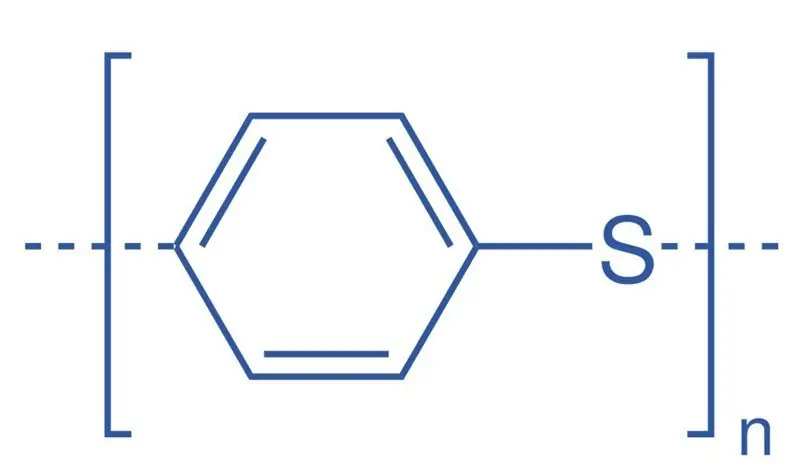
PPS properties: advantages
PPS offers a number of advantages:
- chemical resistance among the best of all thermoplastics: it withstands solvents, oils, fuels and automotive fluids
- resistance to bases and to many non-oxidizing acids; with acids, compatibility depends on concentration and temperature and must be checked against the supplier's tables
- high thermal and dimensional stability
- inherently flame retardant and self-extinguishing: most grades are rated V-0 to UL 94 without flame-retardant additives
- high mechanical strength and good resistance to creep, wear and friction
- high hardness and stiffness
- suitable for parts with very tight tolerances, including in humid environments and under large temperature swings
- allows very thin walls
- good hydrolysis resistance and very low moisture absorption
- good dielectric properties and electrical insulation
- can be bonded with two-component epoxy or polyurethane adhesives
- very low melt viscosity, with good flow even in filled grades.
PPS properties: disadvantages
The main drawbacks are:
- it is generally an expensive material
- it is brittle when unfilled, which is why it is rarely molded without reinforcement
- filled grades are abrasive: the mold needs wear-resistant steels to avoid damage
- the low melt viscosity makes it prone to flash: the tool needs precise shut-offs and properly sized vents
- it is attacked by strong oxidizing agents, such as concentrated nitric acid
- it cannot be solvent bonded, because common solvents do not dissolve it
- UV resistance is limited: for parts exposed to sunlight, choose UV-stabilized or pigmented grades, otherwise the surface may degrade
- with an incorrect hold phase or a mold that is not hot enough, parts may warp or shrink unevenly
- it can only be painted after surface treatment, for example plasma or flame treatment.
Processing methods
PPS can be processed by:
- injection molding
- precision micro injection molding
- compression molding
- sintering
- extrusion.
Injection molding PPS has some specific requirements:
- hot mold: to achieve full crystallinity, mold temperature is typically set around 135-150 °C (275-300 °F). With a cold mold the part stays poorly crystallized and may change dimensions or warp in service at high temperature
- drying: although PPS absorbs very little moisture, pellets are dried before molding according to the supplier's recommendations, to limit flash and surface defects
- tool steels: glass- and mineral-filled grades call for wear-resistant steels, and cavity edges and shut-offs should be checked over time.
Secondary operations
Injection-molded PPS parts can undergo the following secondary operations, in some cases subject to specific pre-conditions:
- finishing
- polishing and tumbling
- laser marking
- painting
- pad printing
- chrome plating
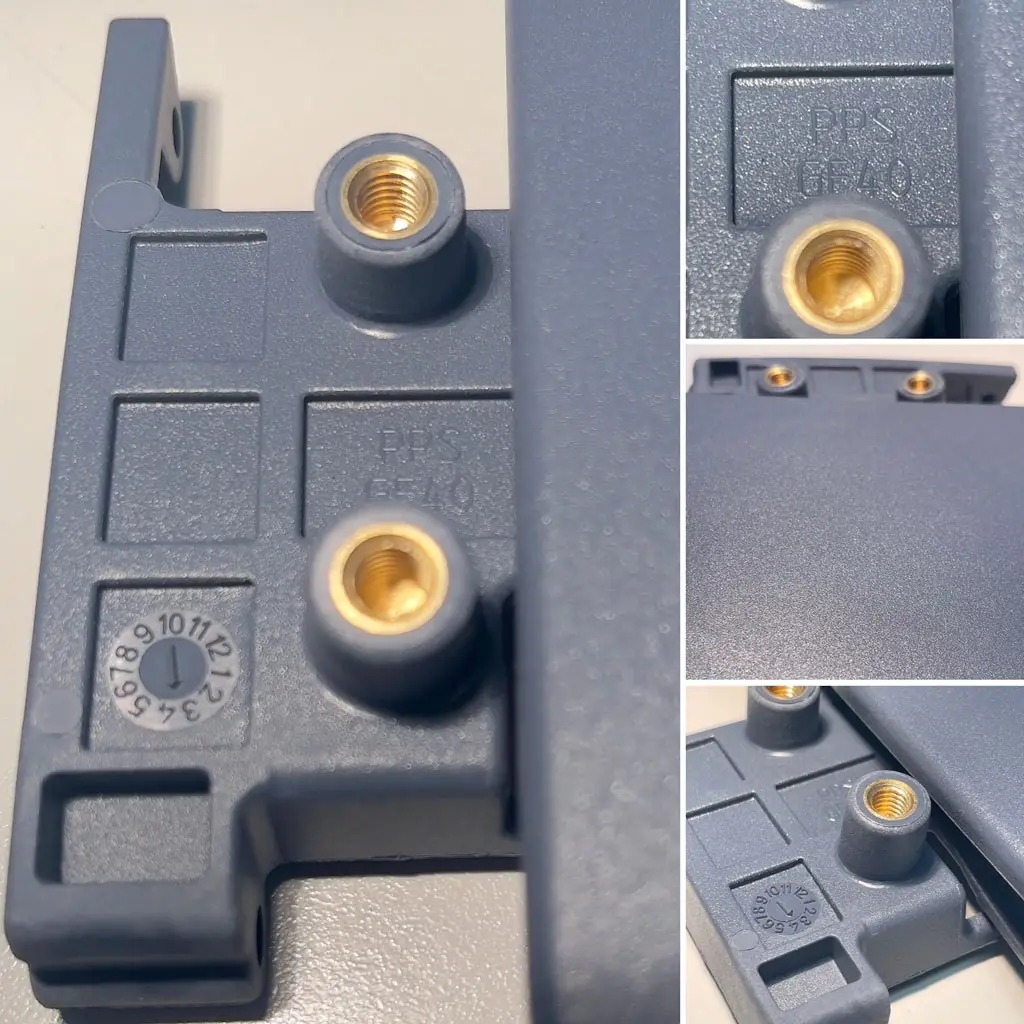
- insert installation.
Applications
PPS is used across several industries, especially where demanding mechanical, chemical and dimensional requirements apply:
- Automotive: under-the-hood components, fans, valves, pumps, impellers, air intake, seals, fuel system parts, braking systems
- Electrical and electronics: encapsulation of chips and electronic components, circuit supports, coil bobbins, insulators, terminal blocks, connectors, lamp holders and lighting parts
- Medical: components for non-implantable medical equipment, such as parts in contact with hot water or exposed to sterilization cycles
- Chemical and petrochemical: pumps, valves and components in contact with aggressive fluids
- HVAC: internal parts of condensing boilers, housings and pump bodies, impellers
- Industrial components and automation: guards, turbines, conveyors.
Final considerations
PPS is a high-performance polymer suited to demanding applications, including in harsh environments. It is, however, an expensive material with some molding challenges, so a study at the start of the project is always worthwhile to confirm it is the right polymer for the part, or whether alternatives such as glass-filled polyamides or PPA are enough.
If you are considering PPS for a new part, we assess the material together with your engineering team, starting from the drawing, operating conditions and volumes. See how we work on our plastic injection molding page.
Frequently asked questions
What is PPS plastic?
PPS (polyphenylene sulfide) is a semi-crystalline, high-performance engineering thermoplastic chosen for chemical resistance, dimensional stability and heat resistance. In injection molding it is almost always used glass-fiber reinforced or mineral filled.
What temperature can PPS withstand?
PPS can be used continuously above 200 °C (392 °F); the exact limit depends on the grade, the filler and the load. It melts at around 280 °C (536 °F). For part design, rely on the data sheet of the specific grade.
Is PPS flame retardant?
Yes, PPS is inherently flame retardant: most grades reach UL 94 V-0 without flame-retardant additives. Check the rating at your wall thickness in the UL listing of the grade.
Why is PPS usually glass filled?
Because unfilled PPS is stiff but brittle. Glass or carbon fibers and mineral fillers raise strength, toughness and dimensional stability, and make PPS suitable for metal replacement.
How is PPS injection molded?
PPS needs a hot mold, around 135-150 °C (275-300 °F), to crystallize fully. Pellets are dried before molding, the tool needs tight shut-offs to prevent flash and, with glass-filled grades, wear-resistant tool steels.
What are the alternatives to PPS?
The most common alternatives are glass-filled polyamides and PPA, when the chemical environment and temperatures are less severe. The choice depends on the part requirements: we assess the material together with your engineering team.