

Sustainability in injection molding: energy and material
Bemar Plast, a contract injection molder in San Giovanni Ilarione, near Verona, Italy, since 1995, describes here specific, documented measures: 100% renewable electricity certified with Guarantees of Origin, the Hybrid Energy System on 11 of our 13 presses, and beside-the-press granulators on all 13 lines to recover sprues and runners. For each figure we state what it covers and what it does not.
At a glance
- Electricity
- 100% from renewable sources, with Guarantees of Origin
- Supplier
- Eco Trade S.r.l., which issues the certificate
- Presses with HES
- 11 of 13
- Energy use of HES presses
- measured 30 to 75% lower than the conventional solution
- Beside-the-press granulators
- on all 13 lines, for sprues and runners
- Regrind
- reused only where the customer allows it
- Part material
- selected and assessed together with the customer
- Molds
- on request, stored and looked after by our technicians to extend their service life
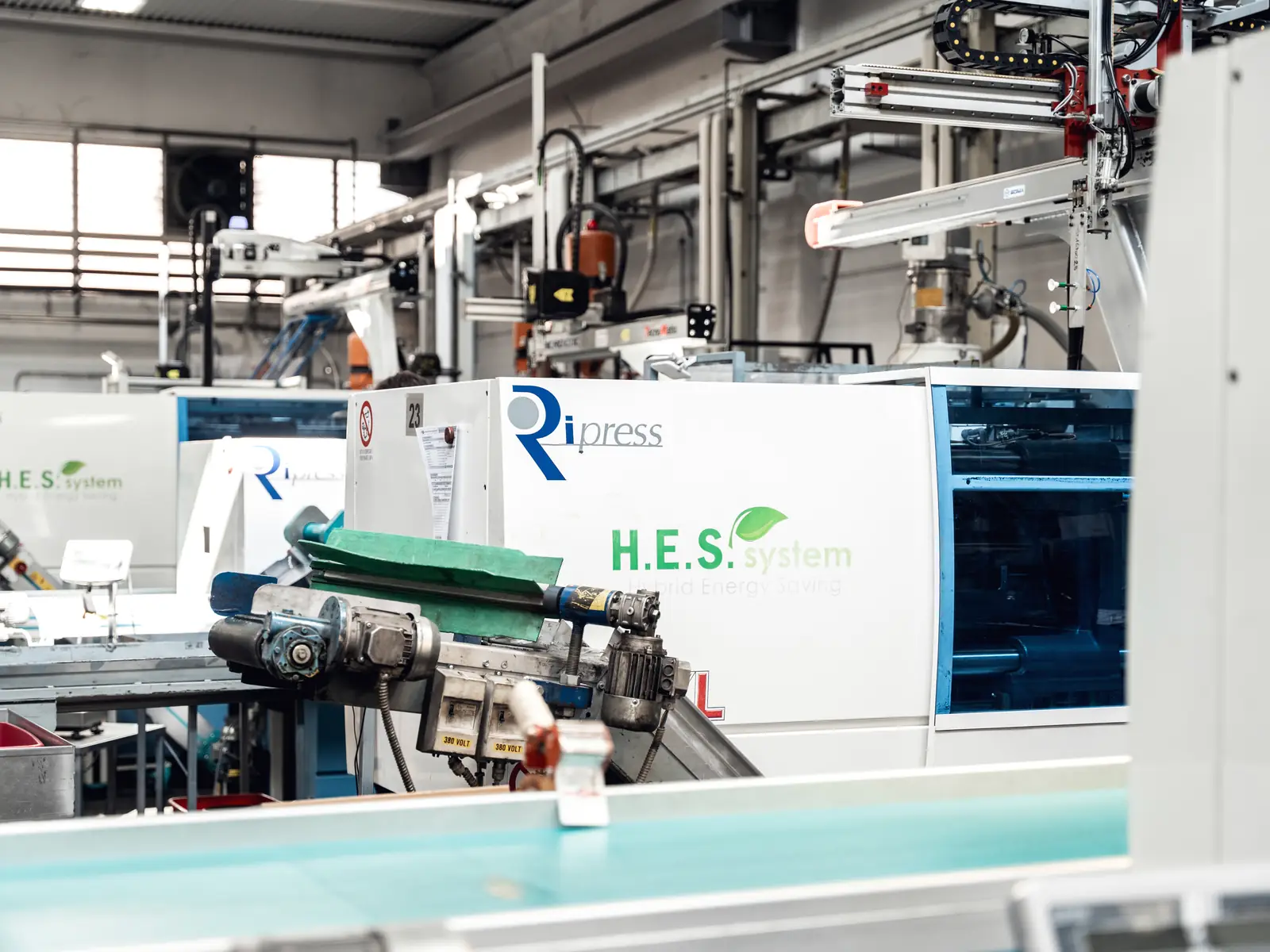
- 100% renewable electricity
- Guarantees of Origin
- HES on 11 of 13 presses
- Granulators on 13 of 13 lines
Energy and materials
- Electricity
- 100% renewableFrom renewable sources, certified with Guarantees of Origin.
- Presses with Hybrid Energy System
- 11 of 13Measured energy consumption 30 to 75% lower than the conventional solution.
- Beside-the-press granulators
- 13 of 13To recover sprues and runners, where the customer allows it.
Electricity from renewable sources
The electricity we use is 100% from renewable sources and is certified with Guarantees of Origin.
How it is certified
With Guarantees of Origin (GOs): certificates that prove the renewable origin of electricity, issued in Italy by GSE (Gestore dei Servizi Energetici), the Italian energy services operator.
Who supplies it
Eco Trade S.r.l., which issues the certificate. On request we send it to you for your supplier sustainability assessment.
What it covers
The statement covers electricity only. We do not extend it to other energy uses, to materials or to transport.
Presses with the Hybrid Energy System
11 of our 13 injection molding presses are equipped with the Hybrid Energy System (HES).
Measured energy use
On the presses with HES, measured energy consumption is 30 to 75% lower than with the conventional solution.
Process stability
The average drift of the P/Q parameters, pressure and flow rate, is below 1%.
The two presses without HES
They are the two two-shot presses with a rotary table, 10 t and 280 t.
Sprue and runner recovery
Every molding line has a beside-the-press granulator: 13 granulators on 13 lines.
Ground in-line
Sprues and runners, the feed channels that are separated from the molded part, are ground right next to the press.
Only where the customer allows it
Regrind goes back into the process only if the customer allows it. If your specification calls for virgin material only, no regrind goes into your parts.
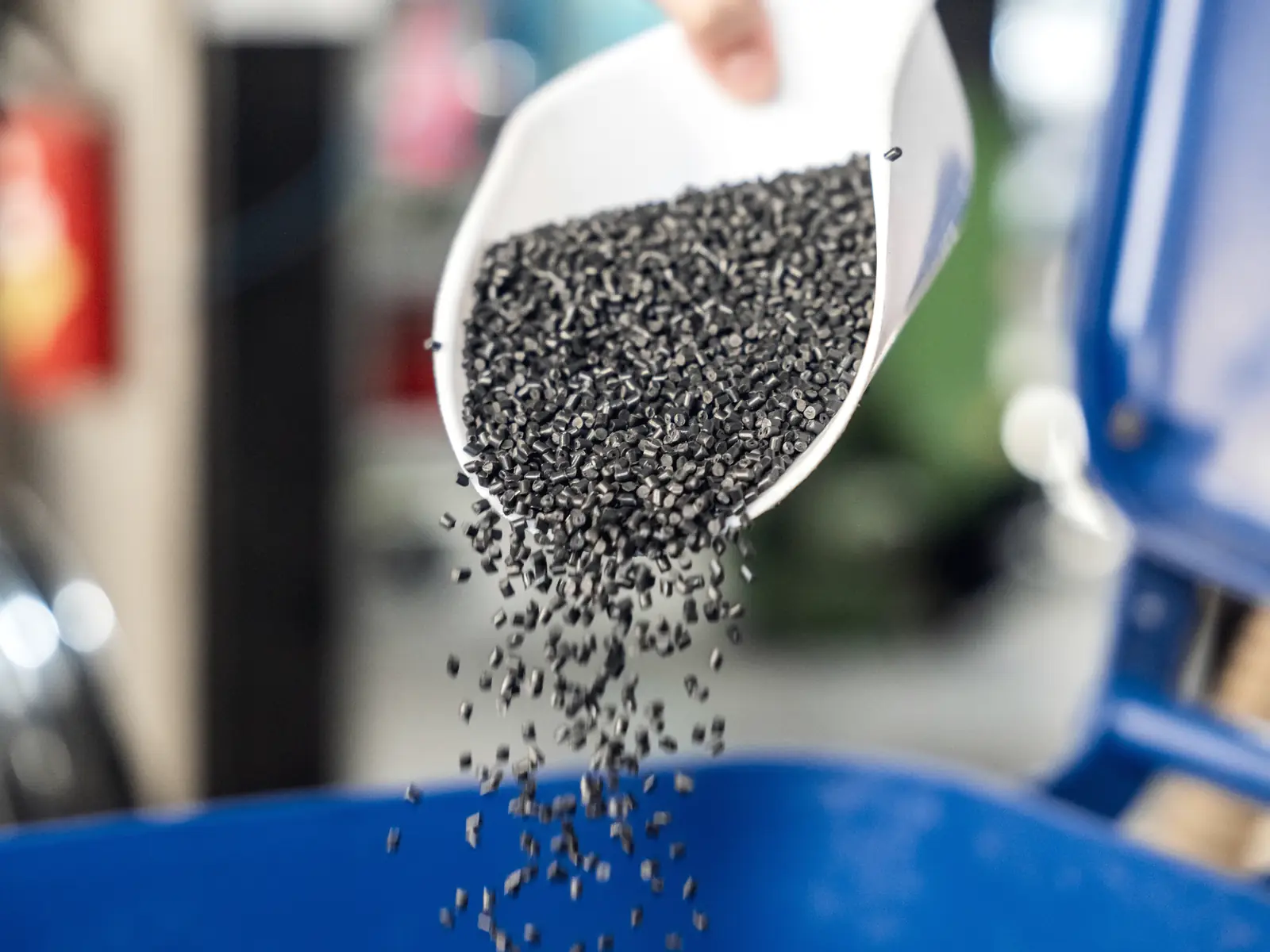
The material of your part
We choose the material together with you, starting from the requirements of the component.
Requirements first
The material must deliver the performance the part requires: mechanical and thermal properties, appearance and the requirements of your industry.
Alternatives to assess
If you want to consider a material with recycled or bio-based content, we assess its moldability and its effect on the part with your engineering team before making any change.
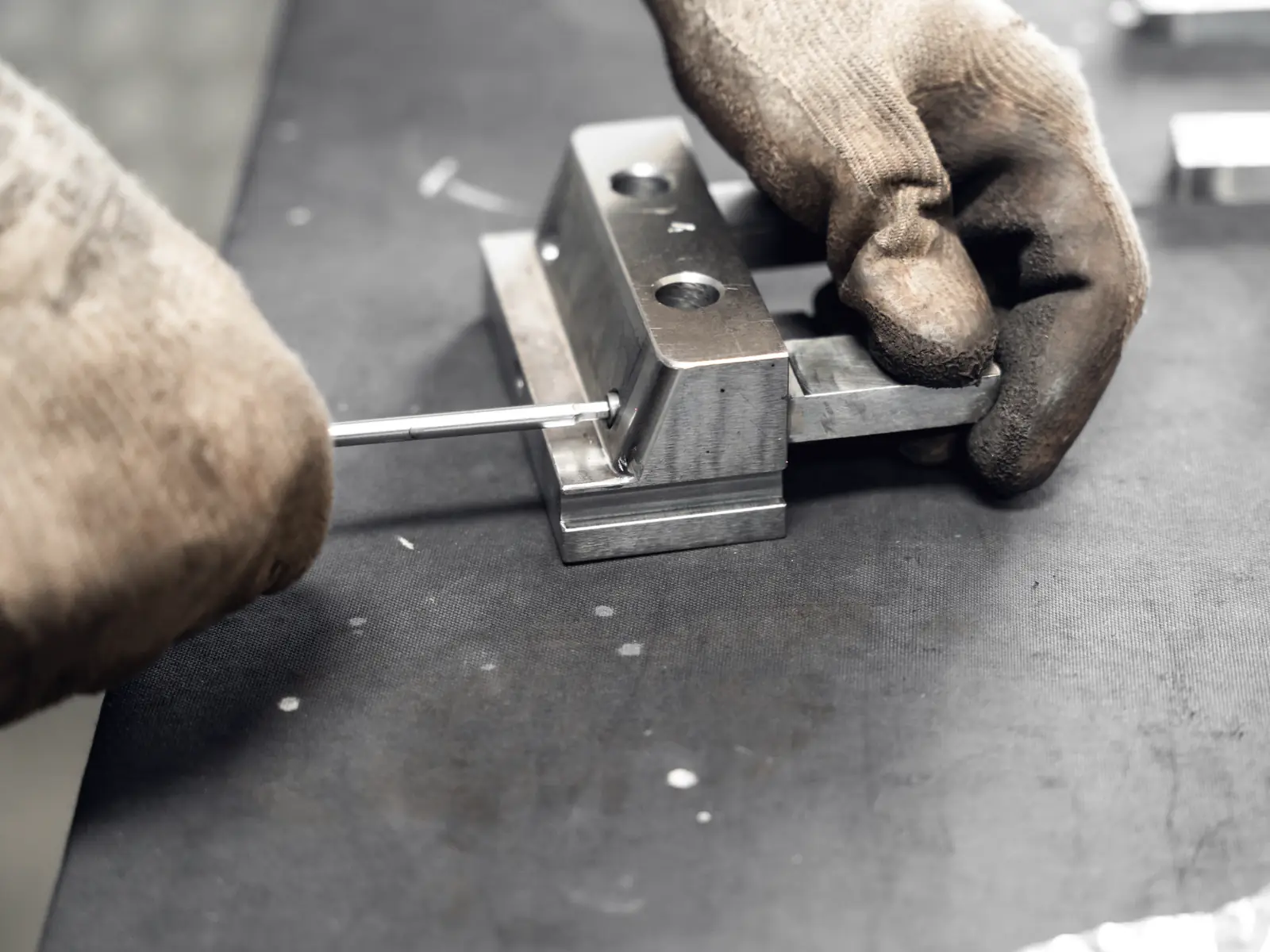
Molds looked after over time
A well-maintained mold stays in production longer.
Storage
The mold always belongs to the customer. On request we store it in our mold warehouse, treated with specific protective products and looked after by our technicians to extend its service life.
Maintenance
For the new molds we design, 3D design approval, tryout and maintenance stay with us.
How we write about the environment
From September 27, 2026, Directive (EU) 2024/825 prohibits, in the European Union, generic environmental claims that cannot be substantiated and climate-neutral claims based on emissions offsetting.
Specific data only
On this page you will find only specific measures, each with its own scope: electricity, presses, sprues and runners, molds.
No neutrality claims
We do not claim that our plant or our parts have zero climate impact: it is not a result we can demonstrate.
Documents on request
For your supplier sustainability assessment, we send you the electricity certificate and the data on our press fleet.
Frequently asked questions about sustainability
Answers to the questions buyers and purchasing teams ask when assessing suppliers.
Where does Bemar Plast's electricity come from?
The electricity we use is 100% from renewable sources, certified with Guarantees of Origin (GOs). It is supplied by Eco Trade S.r.l., which issues the certificate; on request we send it to you for your supplier sustainability assessment.
What are Guarantees of Origin?
Guarantees of Origin (GOs) are electronic certificates proving that a given quantity of electricity was produced from renewable sources. In Italy they are issued by GSE (Gestore dei Servizi Energetici), the Italian energy services operator, under EU rules on renewable energy. They play a role similar to renewable energy certificates (RECs) in North America.
What is the Hybrid Energy System on your presses?
The Hybrid Energy System (HES) is the system installed on 11 of our 13 injection molding presses, with measured energy consumption 30 to 75% lower than the conventional solution. The average drift of the pressure and flow rate parameters stays below 1%.
Which presses do not have the Hybrid Energy System?
The two two-shot presses with a rotary table, 10 t and 280 t. All the other 11 presses, from 60 to 480 t, are equipped with it.
What do you do with sprues and runners?
We recover them with beside-the-press granulators, installed on all 13 molding lines. The regrind goes back into the process only where the customer allows it: if the specification calls for virgin material, your parts are molded with virgin material only.
Can you mold my part with recycled material?
We can assess it together with your engineering team. The material must still meet the part's requirements, so we check its moldability and its effect on the component before making any change.
Do you claim your products are climate neutral?
No. We do not claim zero climate impact and we do not use emissions offsetting: we report only specific, verifiable measures, such as 100% renewable electricity with Guarantees of Origin, the Hybrid Energy System on 11 of 13 presses and sprue and runner recovery on all lines.
Which rules do you follow for environmental claims?
We follow Directive (EU) 2024/825, which from September 27, 2026 prohibits, in the European Union, generic environmental claims that cannot be substantiated and climate-neutral claims based on emissions offsetting. The directive governs commercial practices towards consumers; we apply the same criteria on this page, which is written for businesses. That is why we state what each figure covers: for example, the 100% renewable share refers to electricity, not to other energy uses.
Which documents can you provide for supplier assessment?
On request we send you the electricity supplier's certificate, the data on our press fleet and the ISO 9001:2015 certificate of our quality management system (IMQ No. 9190.BMRP). ISO 9001 covers quality management, not environmental management.
How do you extend the service life of molds?
On request we store the mold in our mold warehouse, where it is treated with specific protective products and looked after by our technicians. The mold always remains the customer's property; for the new molds we design, tryout and maintenance stay with us.
Send us your drawing, and we will tell you how to mold it
We reply with a technical assessment and a quote. To prepare them, we need three pieces of information about your component.
-
The part
The 2D drawing or 3D model of the component.
- STEP
- IGES
-
Material and annual volume
The required material, or the part's operating conditions if the material has yet to be chosen. Then the approximate annual volume.
-
Cosmetic requirements and tolerances
Visible surfaces, color and finish, and the critical tolerances to be met.
If you do not have all the data yet, write to us anyway: we will define it together.
- Phone
- +39 045 6550855
- [email protected]
- Hours
- Monday–Friday, 8 a.m.–6 p.m. Italian time (2 a.m.–noon ET)
Page maintained by the Bemar Plast Team. Last updated: November 17, 2026.